SpaceX and IPOs transfer money from many poor to few wealthy

“Only poor people believe they need alpha they cannot afford to become wealthy.
Wealthy people can become poor chasing alpha but remain wealthy with beta.” -Dr. Moore

Simplified definitions for that quote:
alpha = returns above a simple index fund (e.g., S&P500 fund like VOO)
beta = returns of a simple index fund (e.g., S&P500 fund like VOO)

You are not special.

There is voluminous research documenting the poor performance of IPOs. But to keep this post brief, I will quote from Jensen and Jensen (2025), a textbook I use for my Investments and Modern Portfolio Managementclasses:

…the average investor typically cannot receive an initial allocation of “hot” stocks because the investment bankers reward favored clients with shares. (p. 86, emphasis added)

A tale of two starting prices. A couple important definitions:

  • Offering price = the price paid by the investment bank and their privileged clients. In the case of SpaceX (SPCX), this was $135.
  • Opening price = the price of the first trade on a given day. In the case of SPCX, this was $150.

To be clear, the $135 Offering price for the “initial allocation” did not go to folks purchasing via their brokerage apps (Robinhood, Fidelity, Interactive Brokers, whatever) – that was only for the privileged few. Everyone else paid the $150+ Opening price.

IPO price patterns

So the Jensen and Jensen (2025) textbook is clear, IPOs underperform. Here is the price pattern of IPOs taught to me by Professor Lemmon at Arizona State University way back in 1999 while working towards my MBA degree:
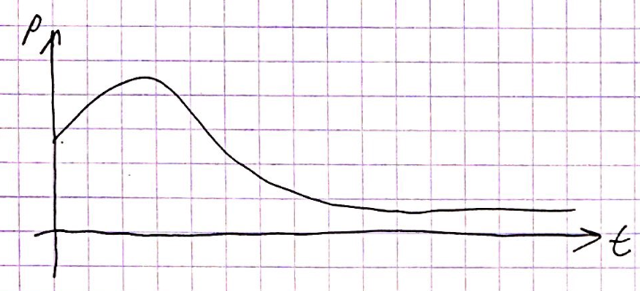
And what do we see in SPCX’s price pattern as of now?:
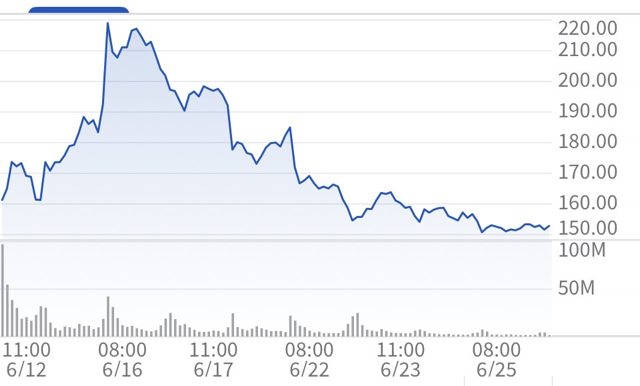
(Source: IBKR app, 2026.06.26 around 7:25AM)

I have many more examples like this of prior IPOs. Professor Lemmon does as well. So does Jay Ritter…

The research on IPO performance. Again, I quote Jensen and Jensen (2025):

Dr. Jay Ritter, an authority on IPOs, finds that the average three-year return of IPO stocks lag that of similar non-IPO stocks by a significant margin. He attributes this to fads and irrational optimism on the part of investors. Thus, you are lucky if you can obtain an initial IPO allocation, but you probably should avoid purchasing recent IPO stocks in the secondary market. (p. 87, emphasis added)

To be clear, the secondary market is where the majority trade and paid the $150+ opening price after the privileged few paid $135 offering price in the primary market. You can map my alpha and beta definitions to Ritter’s empirical evidence: beta (non-IPO stocks, e.g., simple S&P 500 Index fund) outperforms alpha (IPO stocks).

Looking at the SPCX stock chart, you see many purchased SPCX for over $200 in the secondary market. They were caught up in the “fads and irrational optimism”. Those who purchased at the peak lost 1/3rd of their investment in just two weeks.

SpaceX artificial demand and optimism generation

SpaceX has at least six peculiarities that artificially inflate demand to hype up their stock.

  1. Rapid confidential S-1 filing process. See SpaceX’s Record 74-Day IPO: Can OpenAI and Anthropic Replicate SpaceX’s Capital Miracle? HTML. Let this be a warning to those considering jumping on the OpenAI and Anthropic IPO hype trains.
  2. Fast-tracked index inclusion. Several indexes changed their rules so that SPCX could be added early. As a result, several index funds must purchase SPCX stock. But not all indexes and index funds. See SpaceX Faces Delay to S&P 500 Inclusion After Index Provider Keeps Existing Criteria: HTML.
  3. Extremely small float. See SpaceX’s ‘puny free float’ is sparking concerns about greater stock volatility: HTML. Less float (shares avialable to trade), more [artificially induced] demand.
  4. Minimal media discussion of actual float-adjusted index weight. Although the headlines suggest lots of index funds are buying lots of SPCX stock, the reality is more nuanced. Importantly, S&P500 stuck to its rules. The S&P500 index fund is the major US Equity index fund in CalPERs and perhaps most pension funds and 401(k) plans. So the concern that “I’m forced to buy SPCX” is likely untrue for most. See Morningstar.com’s The SpaceX IPO: How Index Funds Are Adapting for more detail: HTML.
  5. Minimal media coverage of operating losses. See SpaceX Stock Is Down 16.4% – and the Real Selling Hasn’t Even Started: HTML. Allow me to quote: “SpaceX posted $18 billion in 2025 revenue but a $4.9 billion net loss, per Morningstar’s analysis of the S-1.” Note: the S-1 filing occurred before the IPO. SpaceX also just took out a $20 billion dollar loan to which that same article states: “Locking in billions in ongoing interest expense while still posting net losses is like financing a kitchen renovation the week your freelance contracts dry up.”
  6. Complicated lockup / release terms. Again, see SpaceX Stock Is Down 16.4% – and the Real Selling Hasn’t Even Started: HTML. You may read it for yourselves. But very soon insiders will be able to cash out putting downward pressure on the price. As the article states: “The Unlock Calendar Is the Real Problem.”

Conclusion

Many have already lost money on the SPCX IPO. Many have lost money on IPOs in the past. The empirical (and even theoretical) research is clear. So why do many retail (Robinhood, Fidelity, etc. account holders) traders still get involved? I conclude with a quote from Bagehot (1971) who may have this correct:

…people presumably participate in the stock market because, like parlor games and sports, it offers the opportunity to win more dramatically and more concretely than is possible in ordinary workaday life.

But don’t forget: It also offers the opportunity to lose more dramatically and concretely. And the data suggest that is the more likely outcome with IPOs.

-Dr. Moore

References

Bagehot, W. (1971). The Only Game in Town. Financial Analysts Journal, 27(2), 12–22. https://doi.org/10.2469/faj.v27.n2.12
Jensen, G. R., & Jensen, T. K. (2025). Investments : analysis and management (Fifteenth edition.). Wiley.

Reduced-typo (not type) version: Spending on AI Is at Epic Levels. Will It Ever Pay Off?

One more time… typo not type. I know it is late and I am tired. But something seems off with auto-correct (and me). Anyway, one more time with feeling:

Here is a reduced-typo version (I’m not looking at this anymore. There are probably still typos. I will do better on my next new post – I hope.):

First, thanks to Ed A. for bringing this article to my attention. I lived in Silicon Valley and worked in the semiconductor industry during the dot-com and internet bubble. I remember how fiber optic companies were all the rage. Then the bubble burst and there was frequent talk of all the “dark fiber” in the ground. Dark fiber are all the fiber optic cables laid in the ground for the “guaranteed” growth in internet traffic. Well, like all technologies, adoption takes time.

The WSJ article provides other examples of hype-driven overspending and subsequent bubble bursting such as UK railroads. It did not mention another recent and prominent example: 3D printers. If you forgot about the hype and subsequent bubble burst of 3D printers, all you need to do is look at a 5 or 10 year chart of DDD or SSYS to jog your memory.

So in short, an unprecedented amount of growth is priced in “AI” stocks and data center construction projects. There’s also a lot of potential damage to the rural areas where these centers are going up: higher electric bills, water pollution, air pollution, increased housing costs, etc.

If you read the book AI Snake Oil, it too talks about not only the hype but the drivers of the hype: the very companies selling you their AI products, the media that needs clicks and views, and public figures incorrectly placed on pedestals as knowing the future.

Have a look at the WSJ article. The numbers are staggering. Then put it in the context of the circular financing we saw announced over the past week or so (e.g., Nvidia invests $100B in Open AI so Open AI can buy $100B of Nvidia chips, Open AI striking a “deal” with Oracle for $300B for “planned” purchases). Lots of plans and intents. Lots of data centers being constructed with no customers too.

Maybe “this time is different.”

Maybe it is not.

-Dr. Moore

https://www.wsj.com/tech/ai/ai-bubble-building-spree-55ee6128

Reduced-type version: Spending on AI Is at Epic Levels. Will It Ever Pay Off?

Please forgive the first version. I drafted it while sitting in my lounge chair on my phone. I didn’t proof read. It is late.

Nevertheless, here is a reduced-type version:

First, thanks to Ed A. for bringing this article to my attention. I lived in Silicon Valley and worked in the semiconductor industry during the dot-com and internet bubble. I remember how fiber optic companies were all the rage. Then the bubble burst and there was frequent talk of all the “dark fiber” in the ground. Dark fiber are all the fiber optic cables laid in the ground for the “guaranteed” growth in internet traffic. Well, like all technologies, adoption takes time.

The WSJ article provides other examples of hype-driven overspending and subsequent bubble bursting such as UK railroads. It did not mention another recent and prominent example: 3D printers. If you forgot about the hype and subsequent bubble burst of 3D printers, all you need to do is look at a 5 or 10 year chart of DDD or SSYS to jog your memory.

So in short, an unprecedented amount of growth is priced in “AI” stocks and data center construction projects. There’s also a lot of potential damage to the rural areas where these centers are going up: higher electric bills, water pollution, air pollution, increased housing costs, etc.

If you read the book AI Snake Oil, it too talks about not only the hype but the drivers of the hype: the very companies selling you their AI products, the media that needs clicks and views, and public figures incorrectly placed on pedestals as knowing the future.

Have a look at the WSJ article. The numbers are staggering. Then put it in the context of the circular financing we saw announced over the past week or so (e.g., Nvidia invests $100B in Open AI so Open AI can buy $100B of Nvidia chips, Open AI striking a “deal” with Oracle for $300B for “planned” purchases). Lots of plans and intents. Lots of data centers being constructed with no customers too.

Maybe “this time is different.”

Maybe it is not.

-Dr. Moore

https://www.wsj.com/tech/ai/ai-bubble-building-spree-55ee6128

Former engineer shares his experience working for DOGE : NPR

Greetings everyone. I know it has been a while since my last post. But after several months of tuning out of the news and focusing, this article seems like one to share. In fact, it was shared with me this morning by an old friend. While reading the article, the following items came to mind that are consistent with the conclusions of the former DOGE engineer.

  1. Government spending actually increased during all this talk of cost cutting. According to the Committee for a Responsible Federal Budget, the Federal Government spent $166 billion more in the first four months of 2025 than in first four months of 2024: HTML.
  2. DOGE savings are just false claims. BBC found that of the proposed $2 trillion ($2,000 billion) in cost savings, later downward revised to $1 trillion ($1,000 billion), only $61.5 billion are itemized and of those line items, only $32.5 billion are verifiable: HTML.
  3. Reducing waste may be more costly than beneficial. In How Not to Be Wrong: The Power of Mathematical Thinking by Jordan Ellenberg, page 236 notes the Social Security Administration (SSA) example. If you stop at “the agency improperly paid $31 million in benefits to 1,546 Americans believed to be deceased” you could [falsely] start screaming “look how inefficient Social Security is.” However, if you realize that “$31 million represents 0.004% of the benefits disbursed annually” you realize that the Social Security Administration is actually very efficient. I have first-hand experience of SSA’s efficiency with a family member’s passing a few years ago.
  4. Delayed travel reimbursement over $2 or $3. I travelled to NY for work in April. My recent NY travel expense reimbursement was held up because of a minuscule tax differential on my room tax reimbursement. We are reimbursed for rooms up to $333. My room was $339. My reimbursement was held up because even though I put in $333 for the room expense, I didn’t pro-rate the tax based on $333 vs $339. We are talking about $2 or $3 difference in total expenses. If you monetize the time spent by the accountant (who is very good to catch such details) and my time to re-do the expense report, it is far more than the $3 in savings.

Parting thoughts…

Just because someone has wealth, political clout, or holds a CEO title does not make that person an expert in operational efficiency. This is especially evident when considering the origins of their wealth or their track record. For example, prior to his first term, President Trump’s businesses filed for bankruptcy six times, which indicates repeated and serious operational failures.

If cost cutting and efficiency are the true goals, then one should either (a) become informed by reading works such as How Not to Be Wrong: The Power of Mathematical Thinking and by consulting with experts, or (b) hire someone with a proven record in the field. Installing a hatchet man who has likely never considered the subtle nuances of complex cases, such as the Social Security Administration example mentioned earlier, set the stage for the acrimonious outcome we all witnessed: HTML.

I could go on about how those in power create demonstrably false narratives about their greatness and keep repeating the falsehoods until they stick, but hopefully you all get the point: don’t buy everything they are selling to you.

-Dr. Moore

https://www.npr.org/2025/06/02/nx-s1-5417994/former-doge-engineer-shares-his-experience-working-for-the-cost-cutting-unit

Former DOGE engineer on his experience working for the cost-cutting unit

Juana Summers8-Minute Listen
Sahil Lavingia, former DOGE engineer, says he didn't see the fraud and abuse in government spending that he was expecting.
Sahil Lavingia, former DOGE engineer, says he didn’t see the fraud and abuse in government spending that he was expecting.

Sahil Lavingia
A former employee of the Department of Government Efficiency says that he found that the federal waste, fraud and abuse that his agency was supposed to uncover were “relatively nonexistent” during his short time embedded within the Department of Veterans Affairs.

“I personally was pretty surprised, actually, at how efficient the government was,” Sahil Lavingia told NPR’s Juana Summers.

Lavingia was a successful software developer and the founder of Gumroad, a platform for online sales, when he joined DOGE in March. Lavingia said he had previously sought to work for the U.S. Digital Service, the technology unit that was renamed and restructured by the Trump administration. He told NPR that he just wanted to make government websites easier for citizens to use and didn’t really care which presidential administration he was working for, despite protests from his friends and family.

Lavingia said the overall message at DOGE was transparency and a vibe of “ask for forgiveness, not permission.” So, when a blogger asked for an interview about Gumroad, he agreed. And when asked, he talked about his work at DOGE, including how little inefficiency he saw compared to what he was expecting.

“Elon [Musk] was pretty clear about how he wanted DOGE to be maximally transparent,” Lavingia said. “That’s something he said a lot in private. And publicly. And so I thought, OK, cool, I’ll take him at his word. I will be transparent.”

Shortly after the interview was published online, Lavingia got an email. Just 55 days into his work at DOGE, his access had been revoked.

This interview has been edited for length and clarity.

Third time’s a charm? – The fast-food industry claims the California minimum wage law is costing jobs. Its numbers are fake

Sorry about sending this in triplicate. 😦
Now this final re-send must include the link (HTML) to the source LA Times article.

Take III…

Greetings everyone. It has been a looooong time since my last post. This news article just came across my radar. It seemed too current and relevant to pass up.

By now, we’ve all probably heard talking points about how raising the minimum wage for fast food restaurant workers in California will cost jobs. This article describes that claim as “baloney, sliced thick.” That brought back fond memories of frying baloney and seeing it form into a cup. I don’t eat the stuff anymore but I digress…

The baloney description is correct. As an academic who frequently works with time series data, I understand the importance of seasonality, a factor that significantly impacts the restaurant industry. The wage increase critics based their arguments on non-seasonally adjusted numbers, failing to account for the industry’s regular employment cycles. Using seasonally adjusted numbers, fast food employment actually went up. See the article below for details.

Despite the inaccuracies, it’s unlikely that outlets like the Wall Street Journal, New York Post, and Hoover Institution, which have been criticized for using non-seasonally adjusted numbers, will issue retractions. This is reminiscent of the media’s refusal to retract the “$1 Trillion Black buying power” myth when challenged by Dr. Jared Ball [1].

The Buddhist perspective offers a multi-step process for the “Final Arrival at Truth” [2]. The first step is to investigate the source: is it free from greed, hate, and delusion? In that spirit, I leave you with a quote from the Buddha:

“Do not accept my words simply out of respect for me. Accept them when you see that they are true.”

Stay serene,

-Dr. Moore

The LA Times article, The fast-food industry claims the California minimum wage law is costing jobs. Its numbers are fake: HTML.

My footnotes:

[1] You can find Dr. Ball’s The Myth and Propaganda of Black Buying Power on Amazon (HTML) or your local library. Another book related to these matters is How Not to Be Wrong by Dr. Ellenberg (Amazon: HTML or your local library).

[2] In the Buddha’s Words pages 100-103 (Amazon: HTML or your local library).

The fast-food industry claims the California minimum wage law is costing jobs. Its numbers are fake

Greetings everyone. It has been a looooong time since my last post. This news article just came across my radar. It seemed too current and relevant to pass up.

By now, we’ve all probably heard talking points about how raising the minimum wage for fast food restaurant workers in California will cost jobs. This article describes that claim as “baloney, sliced thick.” That brought back fond memories of frying baloney and seeing it form into a cup. I don’t eat the stuff anymore but I digress…

The baloney description is correct. As an academic who frequently works with time series data, I understand the importance of seasonality, a factor that significantly impacts the restaurant industry. The wage increase critics based their arguments on non-seasonally adjusted numbers, failing to account for the industry’s regular employment cycles. Using seasonally adjusted numbers, fast food employment actually went up. See the article below for details.

Despite the inaccuracies, it’s unlikely that outlets like the Wall Street Journal, New York Post, and Hoover Institution, which have been criticized for using non-seasonally adjusted numbers, will issue retractions. This is reminiscent of the media’s refusal to retract the “$1 Trillion Black buying power” myth when challenged by Dr. Jared Ball [1].

The Buddhist perspective offers a multi-step process for the “Final Arrival at Truth” [2]. The first step is to investigate the source: is it free from greed, hate, and delusion? In that spirit, I leave you with a quote from the Buddha:

“Do not accept my words simply out of respect for me. Accept them when you see that they are true.”

Stay serene,

-Dr. Moore

The LA Times article, The fast-food industry claims the California minimum wage law is costing jobs. Its numbers are fake: HTML.

My footnotes:

[1] You can find Dr. Ball’s The Myth and Propaganda of Black Buying Power on Amazon (HTML) or your local library. Another book related to these matters is How Not to Be Wrong by Dr. Ellenberg (Amazon: HTML or your local library).

[2] In the Buddha’s Words pages 100-103 (Amazon: HTML or your local library).

Does American tipping culture support casteism?

Ever been to a restaurant with a small party (1-4 people) and received a bill with 18% tip included automatically? While that alone seems a bit weird to me, the line for “additional tip” was even more bothersome. Also, have you noticed that tip screens keep being pushed in front of you even though you are not dining in somewhere? Something is up…

The search begins… I decided to research the origins of tipping culture because it seems uniquely American. Others and I, who have traveled overseas, have been told that tipping is insulting. I wanted to look further and get a sense of why.

Not alone in tipping fatigue. I came across an NPR article titled Got tipping rage? This barista reveals what it’s like to be behind the tip screen: HTML. The title itself suggests many experience tipping fatigue. As I read that article I thought “okay, I get it, the barista is paid less than minimum wage and tips help them earn a living wage.” But I could not also help but wonder two questions:

  1. Why are baristas (and restaurant workers) paid less than minimum wage?
  2. Why don’t workers demand higher pay from their employers instead of demanding higher tips from customers?

So I continued the search…

What I found. NPR has a 46 minute podcast that goes into excruciating detail on the legacy of tipping here in America. When you have time, take a listen to Why We Can’t Escape Tipping: HTML. There is also a 2015 NPR article titled When Tipping Was Considered Deeply Un-American: HTML. A couple things jumped out to me right away:

  • Tipping is a feudal tradition from the Middle Ages that supports a class/caste system. As mentioned in that podcast “by tipping someone you render them inferior.”
  • The United States had several states with bans on tipping until 1926. Even The NY Times had many editorials against tipping in the 1870s and 1880s.

But that’s not the real a-ha! moment…

Tipping in America is rooted in slavery. Or as stated earlier, tipping supports a class/caste system.

  • Tipping took off after the Civil War. Why? Millions of freed slaves were now looking for work. Business owners didn’t pay recently freed slaves just as slaves were not paid before being freed. Enter tipping.
  • Pullman luxury railroad cars only hired Black, and specifically Southern Black men because, apparently as Pullman himself stated “the plantation trained them how to be pleasing.”
  • The Pullman “Palace on wheels” created an upper class fantasy for middle and lower class people.
    • Dr. Moore comment: Sounds a little like “influencers” and wasting time watching them.
  • Journalist John Speed wrote in 1902 “Negroes take tips, one expects that of them – it is a token of their inferiority. But to give money to a white man was embarrassing to me.”

On the anti-tipping movement. In addition to anti-tipping editorials in The NY Times and people who shared the perspective of John Speed:

  • Several notable anti-tippers include Leon Trotsky, Willam Howard Taft, Mark Twain, Rockefeller, Carnegie, Babe Ruth.
  • The labor force was also against tipping because it demeaned them.
  • The Georgia Anti-Tipping society had 100,000 members.
  • Traveling salesman felt like the were bearing the burden of tipping.
  • Several states enacted laws that made accepting or giving a tip a misdemeanor. But it was impossible to enforce.
  • In 1916 William Scott published The Itching Palm – a “long diatribe” against tipping.

On that Itching Palm book. You can find a copy here: HTML. Here are my take-aways from listening to a discussion of the book during the NPR podcast:

  • Tipping is equivalent to flunkyism – 5 million itching palms in America.
  • “Tipping is the price of pride“ and “a new form of slavery.”
  • He even quoted the Bible while equating tips to gifts: Exodus – a gift destroys the heart, Luke on covetousness.
  • Paying a tip is like paying a ransom to a pirate to avoid having your ship sunk. I.e., akin to a bribe to have your food delivered the way you requested.
  • Tipping is an exploitative labor practice.
  • However, William Scott was very much for better wages for laborers – from their employers.

So what killed the anti-tip movement? Three things.

  1. Formation of the National Restaurant Association lobbying group in 1919. This smells like the American Medical Association and abortion (See Before Roe: The physician’s crusade: HTML)
  2. Prohibition (1920-1933) lead to reduced restaurant revenues. That necessitated tipping.
  3. The first minimum wage law in 1938 that was part of FDR’s new deal – but that law excluded restaurant workers! Looks like the National Restaurant Association was successful in their lobbying!

The main person in the podcast, Nina Martyris, states tipping is an “Un-American, two-tier system to exclude restaurant workers.” I would almost disagree. America was founded on slavery. So the two-tier system Martyris refers to is just an extension of the two-tier system in America’s founding DNA. A never-ending pursuit for free or near-free labor by the wealthy few.

Meanwhile, Europe included a “service charge” in restaurant bills. So, as tipping faded away in Europe where it started it was only reinforced in the United States. Read on…

1966 Congress enacted sub-minimum wage tip credit.

  • Until this point, restaurant owners could pay employees $0. (Free to near-free labor again)
  • Then, with the passage of sub-minimum wage tip credit, the tip had to make up the difference between sub-minimum wage ($0.63/hr) and minimum wage. If tips did not, restaurant owners must make up the difference. Read: unenforceable.
  • The sub-minimum wage amount tracked minimum wage (about 40-50% of minimum wage) until 1996 when…

1996 Congress fixes sub-minimum wage at $2.13/hr.

  • Why, what prompted this? Lobbying by the Restaurant Association.
  • Federal sub-minimum wage was $2.13/hr in 1996, it is $2.13 today in 2023. (Free to near-free labor again)
  • Some states require restaurant workers get paid a minimum wage or above. In California, minimum wage is $15.50 (compared to federal minimum wage of $7.25/hr). But for tipped employees it is $11 to $12/hr but must earn at least $15.50 with tips. If not, the employer is supposed to make up the difference.

Closing thoughts from podcast interviewee Nina Martyris (HTML)

  • She is surprised more people are not bothered by the systemic inequality inherent in tipping culture.
  • One reason why not, which relates to what is in the American DNA: Majority of service workers are women and people of color (40% apparently are people of color).
    • Dr. Moore comment: this speaks to Isabel Wilkerson’s book Caste and how race is a smokescreen for caste.
  • Tipping also fosters sexual harassment. Make yourself more sexually appealing to get a bigger tip.
  • The power dynamic is reinforced by the tipping mechanism.

Closing thoughts / possible action plan of Dr. Moore

  • Be aware (woke?) of the legacy of tipping and what is embedded in tipping culture DNA today.
  • I’m early in trying this, but for now, when I go to a bakery to purchase something off the shelf, I no longer tip. I routinely observe those in the dominant caste happily refuse to tip in these situations (channeling their inner William Taft or Babe Ruth?). I will not channel my inner “traveling salesman” and bear the burden as described earlier.
  • My response if there is any complaint: “I fully support you earning a living wage but not through this caste-based servility tipping culture. Your employer should, pardon the pun, bake the labor costs into the price of the item. At that point, all customers will share the burden more equitably.”
  • When at a restaurant, I do tip. But now I am fixing it at 18% of the pre-tax amount everywhere no matter what. Phones have calculators. Or for mental stimulation, pull out a pen and paper and do the calculation.
  • If things get too confrontational (if service diminishes because I didn’t bribe, I mean tip, enough), then just avoid situations that involve tipping. I.e., cook at home, more prepared foods from grocery stores, etc.
  • Or, move to Europe or other location where there is no tipping.

Well, I suppose that is enough “food for thought” for now.

-Dr. Moore

Did BofA “pull a Wells Fargo”?

Here we go again: CFPB Takes Action Against Bank of America for Illegally Charging Junk Fees, Withholding Credit Card Rewards, and Opening Fake Accounts: HTML.

Wells Fargo deceptive history. I posted about Well’s Fargo many times over the years.

  • 2012 – reckless lending practices: HTML.
  • 2018 – forcing unwanted insurance on customers: HTML. (Note: BofA tried to do this to my uncle in Los Angeles with flood insurance for his house on a hill.)
  • 2018 – modification of business loan customer documents without permission in 2018: HTML.
  • 2019 – discrimination in hiring: HTML.
  • 2022 – charging illegal fees and interest: HTML. The article linked in that post states: “Wells Fargo has been sanctioned repeatedly by U.S. regulators for violations of consumer protection laws going back to 2016, when employees were found to have opened millions of accounts illegally.”

Bank of America too. I also posted about Bank of America several times as well.

  • 2013 – Selling “toxic waste” mortgage securities: HTML.
  • 2014 – $16.65 billion dollar settlement of “toxic mortgage securities during the subprime housing boom’: HTML.
  • 2014 – deceptive credit card practices: HTML.

What’s a consumer to do? I tell students every semester to consider using credit unions instead of big banks. Regardless, here are three related perspectives:

  1. “Proceed as if everyone is trying to **** you.” -late friend W.C.
  2. “Know the condition of your flocks.” -Biblical perspective
  3. “Be mindful.” -Buddhist perspective.

Be mindful my friends…

-Dr. Moore

‘You wussed out’: Dave Ramsey reveals the real reason Americans are going broke — and it’s not because of hot inflation. 3 simple steps to secure your financial foundation | Moneywise

Yes that is an attention-grabbing title. In short, Dave Ramsey says Americans didn’t flinch at inflation. Rather than cut back spending, Americans borrowed more.

Quick check. Not having 100% confidence in what Dave Ramsey (or any human) says, I did a quick check on the economic data. It turns out the data do support Ramsey’s argument. Figure 1 below shows that as inflation (blue) increased starting June 2020, consumer credit (red) and spending (white) also increased.

Two Takeaways

  1. Reflect on your own spending and debt patterns of the past couple years.
  2. Adjust if you are on the path to wealth destruction rather than wealth construction.

Enjoy,

-Dr. Moore

Link to the article: HTML.

Figure 1. Inflation, spending, and consumer debt over time.
PCE CUR$ (White): A measure of U.S. consumer spending. Specifically, U.S. Personal Consumption Expenditures in nominal dollars.
CPI YOY (Blue): A measure of U.S. inflation. Specifically, Year over Year changes in the Consumer Price Index.
CCOSTOT (Red): A measure of U.S. consumer debt. Specifically, Federal Reserve Consumer Credit Outstanding Total Seasonally adjusted in billions of dollars.